Mihrab and Qibla
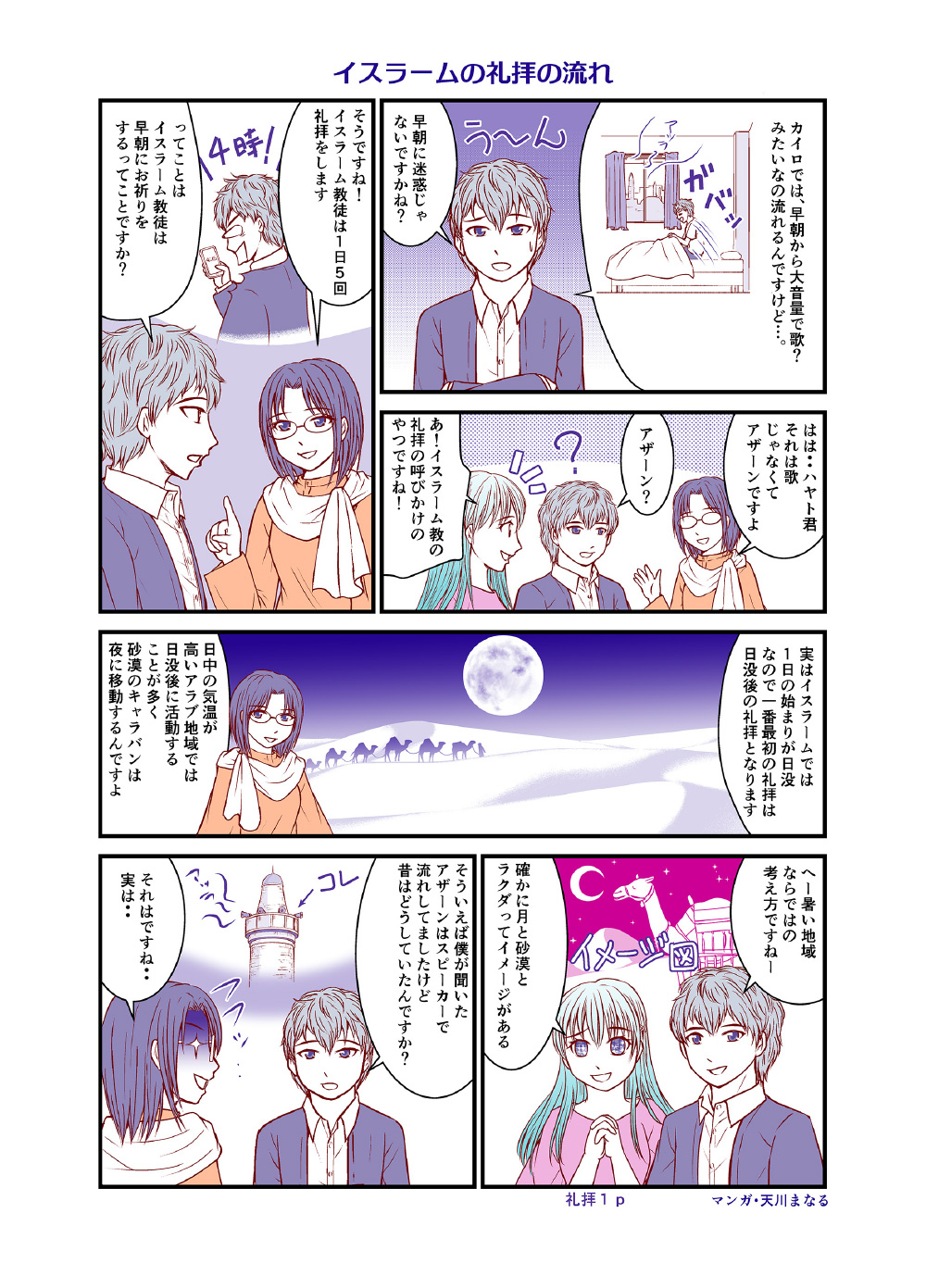
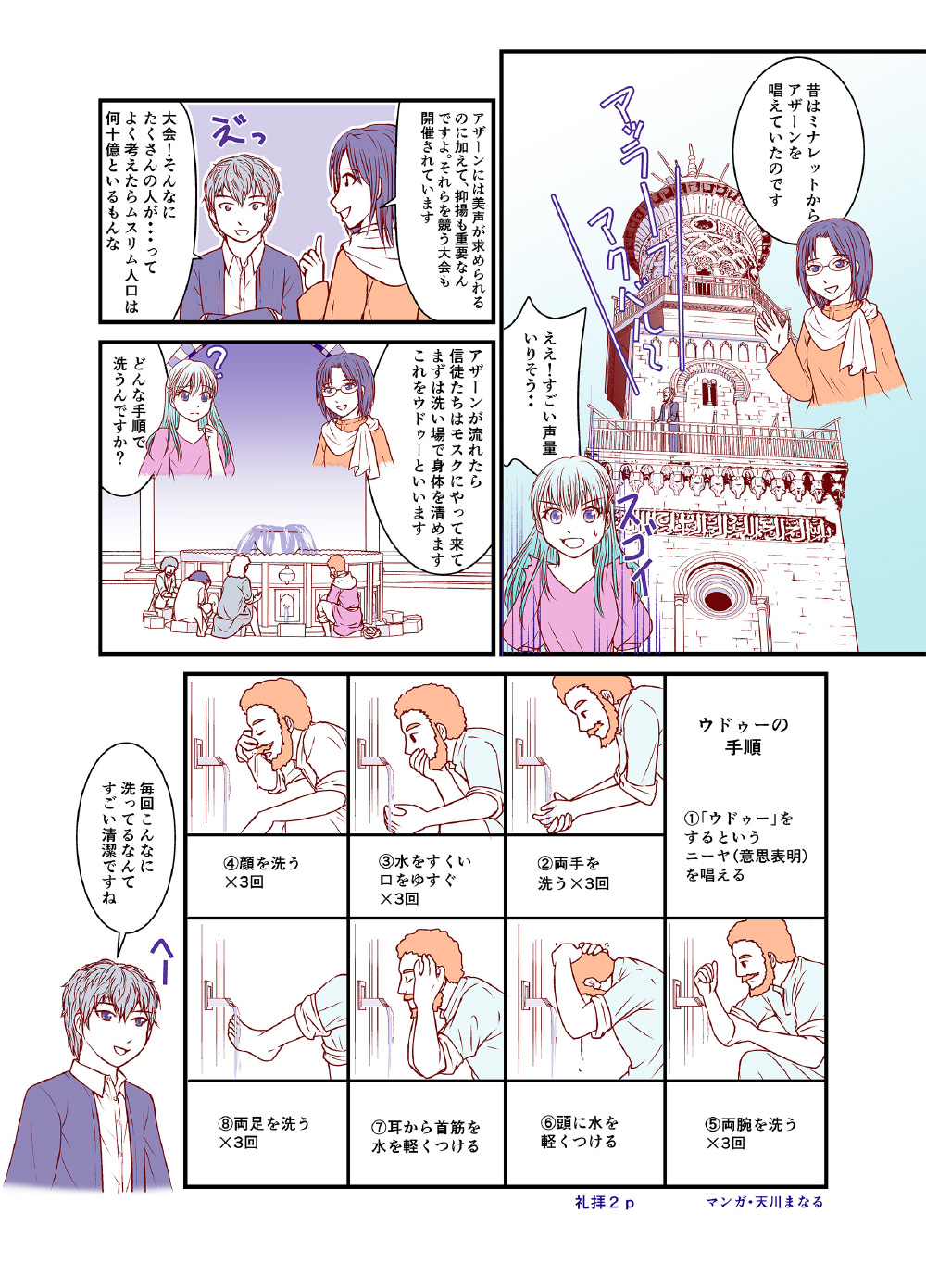
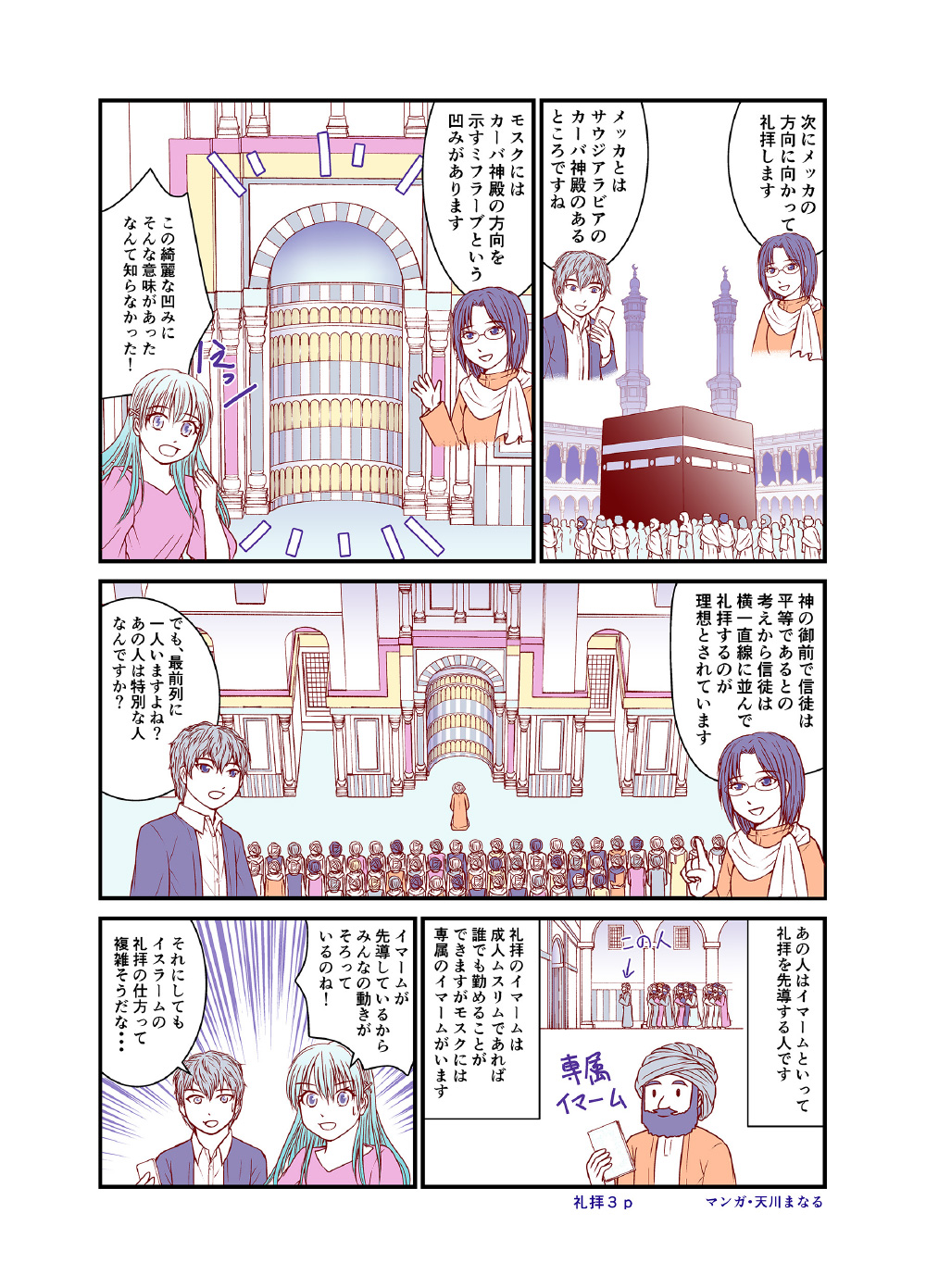

When visiting a mosque and seeing inside, one may notice a large niche set into the wall. This is called a mihrab in Arabic. Muslims worship toward the niche. This direction of prayer is called the qibla in Arabic1. It is the Kaaba, a sacred Islamic site, toward which the qibla points2.
1 エスポズィト, 2020: 98, 299.
2 キブラはもともとエルサレムの方角とされていたが、624年に預言者ムハンマドに啓示が下り、マッカ(メッカ)のカーバ神殿に変更された。クルアーンの雌牛章142節から145節には、その経緯が書かれている(黒田, 1983: 75; 森, 2002; 嶋田, 2002)。
Mihrabs vary from mosque to mosque. It is also not uncommon for a single mosque to have more than one mihrab3. As shown in the photograph below, their size and form differ considerably. In large mosques, mihrabs can reach a height of approximately four to five meters. While they are generally arched, their upper sections may be dome-shaped, nearly triangular, or take other forms, reflecting considerable variation.
3 羽田, 2002; 深見, 2003: 120.
In many cases, mihrabs are beautifully adorned. Their patterns and colors also differ from mosque to mosque. For example, the following mihrabs are decorated with various motifs such as Arabic calligraphy and geometric designs known as arabesque (or Islamic pattern)4.
4 小杉・片倉, 2002. ミフラーブの装飾や模様について、より詳しく知りたい方は、深見, 2003の第5章「ミフラーブ」や深見, 2016などが参考になる。
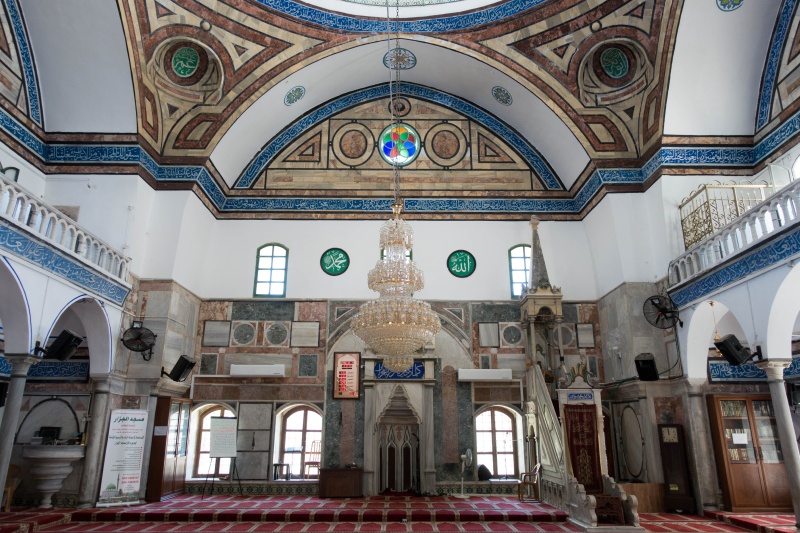
©Qalawun VR Project (Photographed by Hiroyuki SUZUKI)
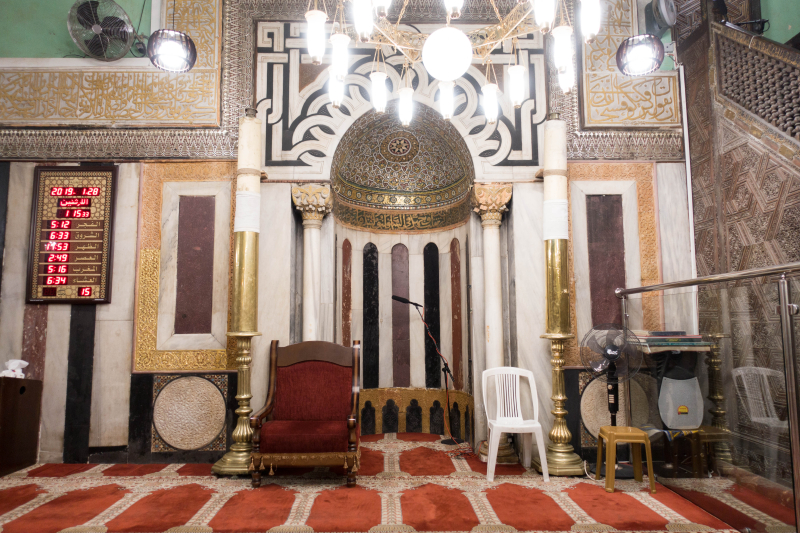
©Qalawun VR Project (Photographed by Hiroyuki SUZUKI)
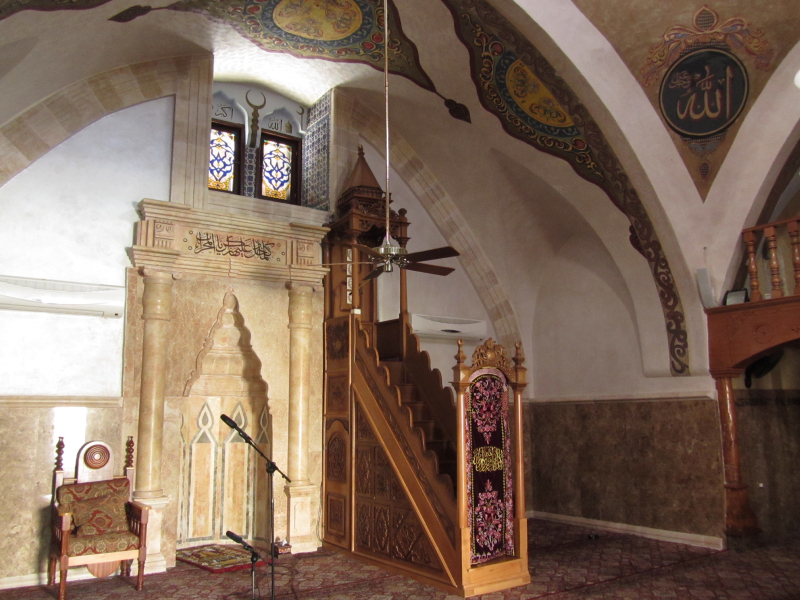
©Qalawun VR Project (Photographed by Hiroyuki SUZUKI)
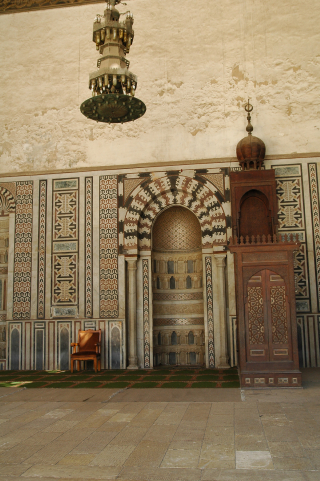
©Qalawun VR Project (Photographed by Hiroyuki SUZUKI)
However, not all mosques have such gorgeous mihrabs. In small and modest mosques, a mihrab often consists simply of a niche in the stone wall, without any special decoration. For example, the mosque the author visited in a small village in northern Jordan has only a mihrab with an arch-shaped niche slightly taller than a man on the stone wall, without any decoration. What was particularly striking was that a fan had been installed above the mihrab and was continuously running, perhaps due to the intense midsummer heat.
As noted earlier, the mihrab indicates the qibla, the direction of prayer. It was essential for Muslims to determine the qibla; consequently, geodesy developed in the Islamic world5.
5 嶋田, 2002; 中村, 2002; 森, 2002.
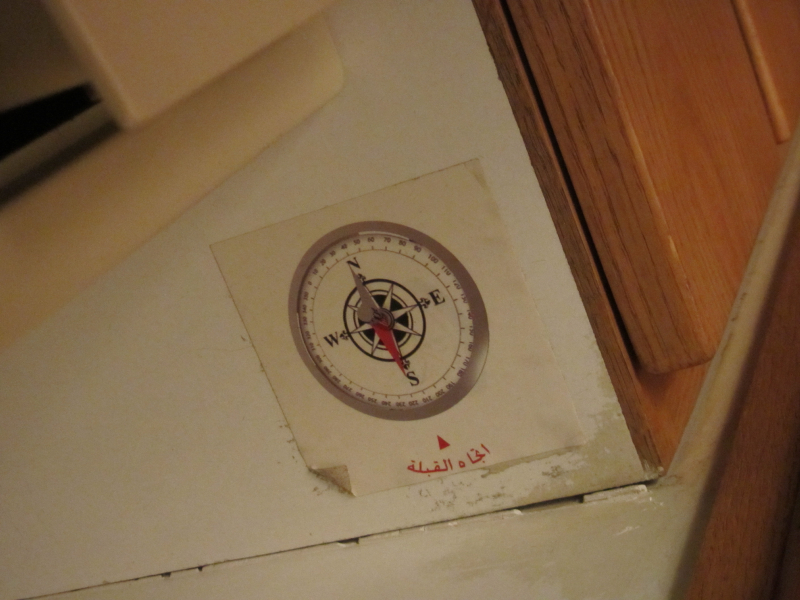
Today, the qibla is deeply integrated into daily lives and can be seen frequently in the Muslim community. One can observe a mark indicating the qibla on the wall or ceiling of the hotel room. However, the form of this mark is not standardized; it is sometimes a sticker showing the direction, while in other cases it is only a piece of paper stating “this direction is the qibla.” In addition, some airlines, particularly those in Muslim-majority countries, offer a service that displays the qibla direction on the monitor; if you are interested, please check it. Recently, applications have been developed to indicate the qibla using smartphones’ location information services. Daily life for Muslims has also become increasingly convenient with the changing times.
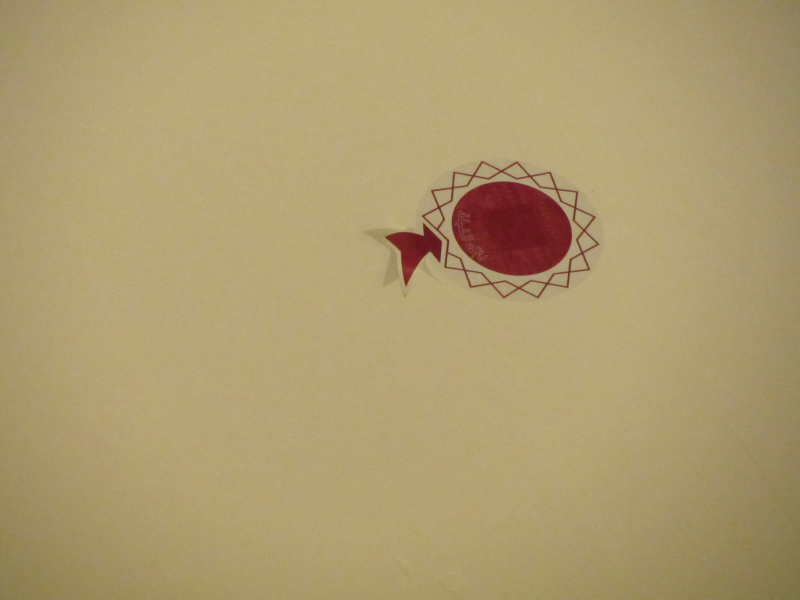
©Qalawun VR Project (Photographed by Hiroyuki SUZUKI)
©Qalawun VR Project (Photographed by Hiroyuki SUZUKI)
Bibliography
Esposito, John L. ed. 2020. Oxford Dictionary of Islam. Translation Supervised by Makoto Hachioshi, Translated by Tatsuya Kikuchi and Kyoko Yoshida. Tokyo: Asakura Publishing Co., Ltd. Originally published as Oxford Dictionary of Islam (Oxford: Oxford University Press, 2003).
Fukami, Naoko. 2003. Isuramu Kenchiku no Mikata – Seinaru Isho no Rekishi [Guide to the Islamic Architecture – History of Holy Design]. Tokyo: Tokyodo Shuppan Co., Ltd.
———. 2016. “Mifurabu Kikō [Mihrab Travelogue].” Journal of Islamic Area Studies. 8: 3–11.
Haneda, Masashi. 2002. “Mifurābu [Mihrab].” Iwanami Isurāmu Jiten [Iwanami Dictionary of Islam]. Edited by Kazuo Otsuka et al. Tokyo: Iwanami Shoten, Publishers. 948.
Japan Muslim Association. 1982. Nichi-A Taiyaku/Chukai Sei-Kuruān [Complete Interpretation of the Meaning of The Holy Quran].
Kosugi, Yasushi, and Katakura, Motoko. 2002. “Mifurābu [Mihrab].” Isurāmu Sekai Jiten [Encyclopedia of the Islamic World]. Edited by Motoko Katakura et al. Tokyo: Akashi Shoten. 360.
Kōran [Quran]. Vol. 1. 1958. Translated by Izutsu, Toshihiko. Tokyo: Iwanami Shoten, Publishers.
Kuroda, Toshio. ed. 1983. Isurāmu Jiten [Dictionary of Islam]. Tokyo: Tokyodo Shuppan Co., Ltd. 75–77.
Mori, Nobuo. 2002. “Kibura [Qibla].” Iwanami Isurāmu Jiten [Iwanami Dictionary of Islam]. Edited by Kazuo Otsuka et al. Tokyo: Iwanami Shoten, Publishers. 307.
Nakamura, Mitsuo. 2002. “Kibura [Qibla].” Isurāmu Sekai Jiten [Encyclopedia of the Islamic World]. Edited by Motoko Katakura et al. Tokyo: Akashi Shoten. 180.
Shimada, Johei. 2002. “Kibura [Qibla].” Shin-Isurāmu Jiten [New Encyclopedia of Islam]. Edited by Association for Islamic Studies in Japan et al. Tokyo: Heibonsha. 195.
Sugimura, Toh. 2002. “Mifurābu [Mihrab].” Shin-Isurāmu Jiten [New Encyclopedia of Islam]. Edited by Association for Islamic Studies in Japan et al. Tokyo: Heibonsha. 473.